| Performance Parameters | Nanocrystalline Core (Iron-based) | Amorphous Core (Iron-based) | Ferrite Core (Mn-Zn) |
| Saturation Magnetic Flux Density Bₛ (T) | 1.2~1.25 | 1.5~1.56 | 0.3~0.5 |
| Initial Permeability μᵢ | 80,000~150,000 | 3,000-8,000 | 1,000~10,000 |
| Coercive Force Hc (A/m) | 0.3~1.5 | 1~4 | 10~100 |
| Curie Temperature Tc (℃) | 560~570 | 400~410 | 200~250 |
| Resistivity ρ (μΩ・cm) | 130 | 130~150 | 10²~10⁴ |
| Typical Iron Loss (W/kg) 10 kHz, 0.5 T | 8~12 | 30~45 | Fails at 0.5T |
| Applicable Frequency Range | 50 Hz~150 kHz | 50 Hz~20 kHz | 1 kHz~1 MHz |
| Temperature Range (℃) | -40~180 | -40~150 | -20~120 |
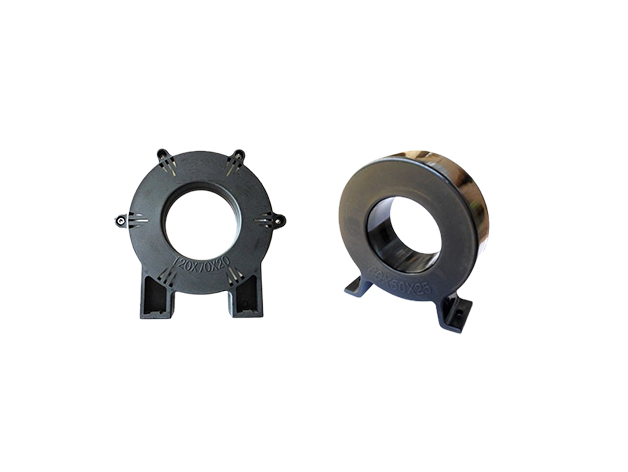
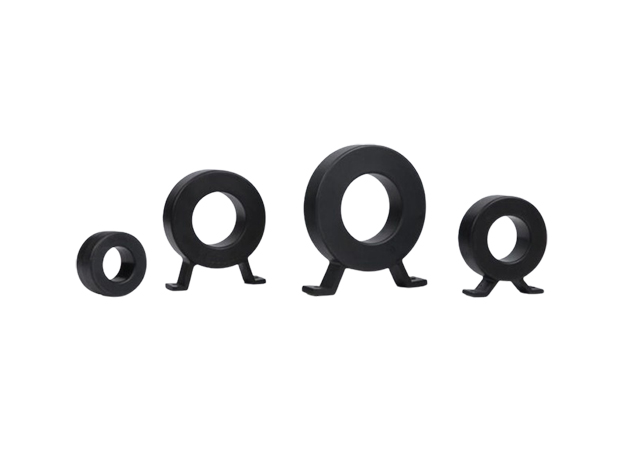
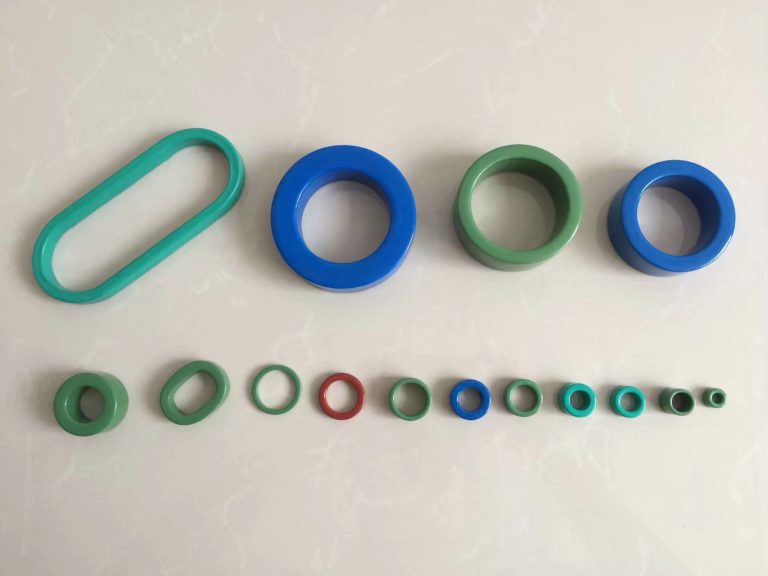
Main Difference of Nanocrystalline Core, Amorphous Core and Ferrite Core
- Saturation Magnetic Flux Density: Amorphous core (1.5T) > Nanocrystalline core (1.2T) > Ferrite core (0.5T). The amorphous core has the strongest anti-saturation capability, while the ferrite core is prone to saturation.
- Permeability: Nanocrystalline core > Amorphous core > Ferrite core. The nanocrystalline core has the highest permeability, making it suitable for high-sensitivity inductors/transformers.
- High-Frequency Loss: Nanocrystalline core < Amorphous core < Ferrite core. The nanocrystalline core has the lowest medium and high-frequency loss, while the ferrite core still has advantages at ultra-high frequencies (MHz level).
- Temperature Stability: Nanocrystalline core (570℃) > Amorphous core(410℃) > Ferrite core (250℃). The nanocrystalline core has the optimal high-temperature performance, while the ferrite core is prone to demagnetization at high temperatures.